End-of-year archaeology
Cabinets are opened and counted only after the semester has already scattered their contents.
Record supplies and equipment across classrooms, labs, carts, closets, and shared rooms. WHER helps authorized staff retrieve last-recorded locations without claiming district asset audits or automated counts.
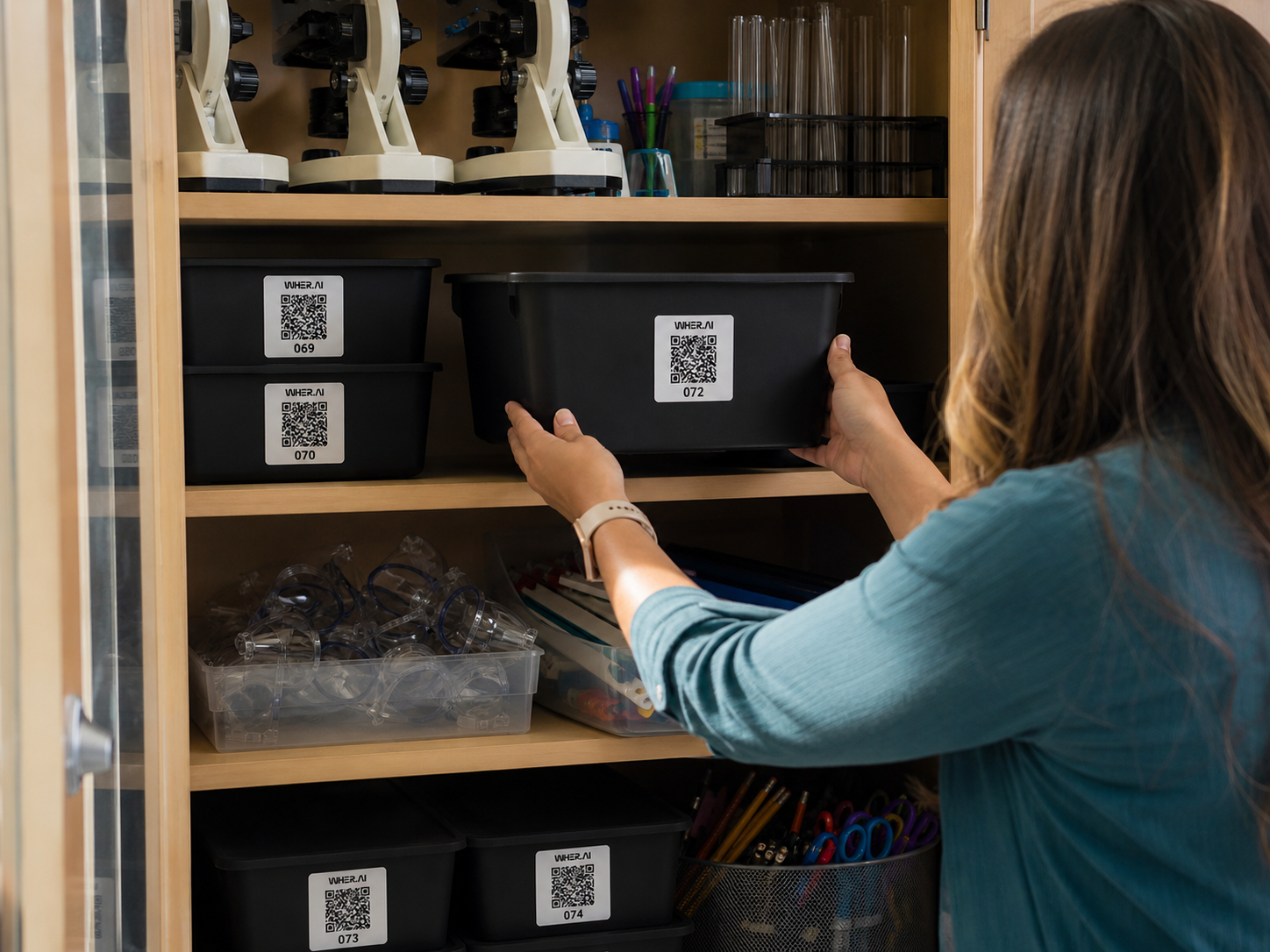
Cabinets are opened and counted only after the semester has already scattered their contents.
Supplies are reordered because another classroom’s storage is invisible.
Labs, libraries, art rooms, and equipment closets serve many people with no common map.
Assign WHER identities to the storage locations staff already use.
Confirm the supplies and equipment visible in each location.
Authorized staff check the last recorded room and cabinet before buying or borrowing.
Separate rooms, labs, carts, cabinets, shelves, and bins.
Give authorized staff a shared view of recorded storage.
Recognize supplies and equipment without opening every cabinet.
Begin with one room using supported devices.
Keep the storage map when classrooms or staff change.
WHER does not guarantee counts, grant compliance, or district asset control.
Yes. A room, lab, or department can begin with its own labeled storage locations.
Authorized workspace members can search and update records according to their roles.
No automatic quantity or annual-audit claim is made. Staff should review and update records.
A cart, cabinet, or shelf can be represented as a recorded storage location for reviewed devices and accessories.
No. Keep the records and documentation required by your school, district, or funder in the systems they approve.
Make the shared supplies easier to find today.