A whole-home mental load
Decades of belongings across rooms, closets, and cabinets exceed anyone’s working memory.
Work room by room, give sorting boxes stable identities, and share a reviewed belongings memory with authorized family. WHER supports organization; it does not appraise property, decide ownership, or replace legal estate records.
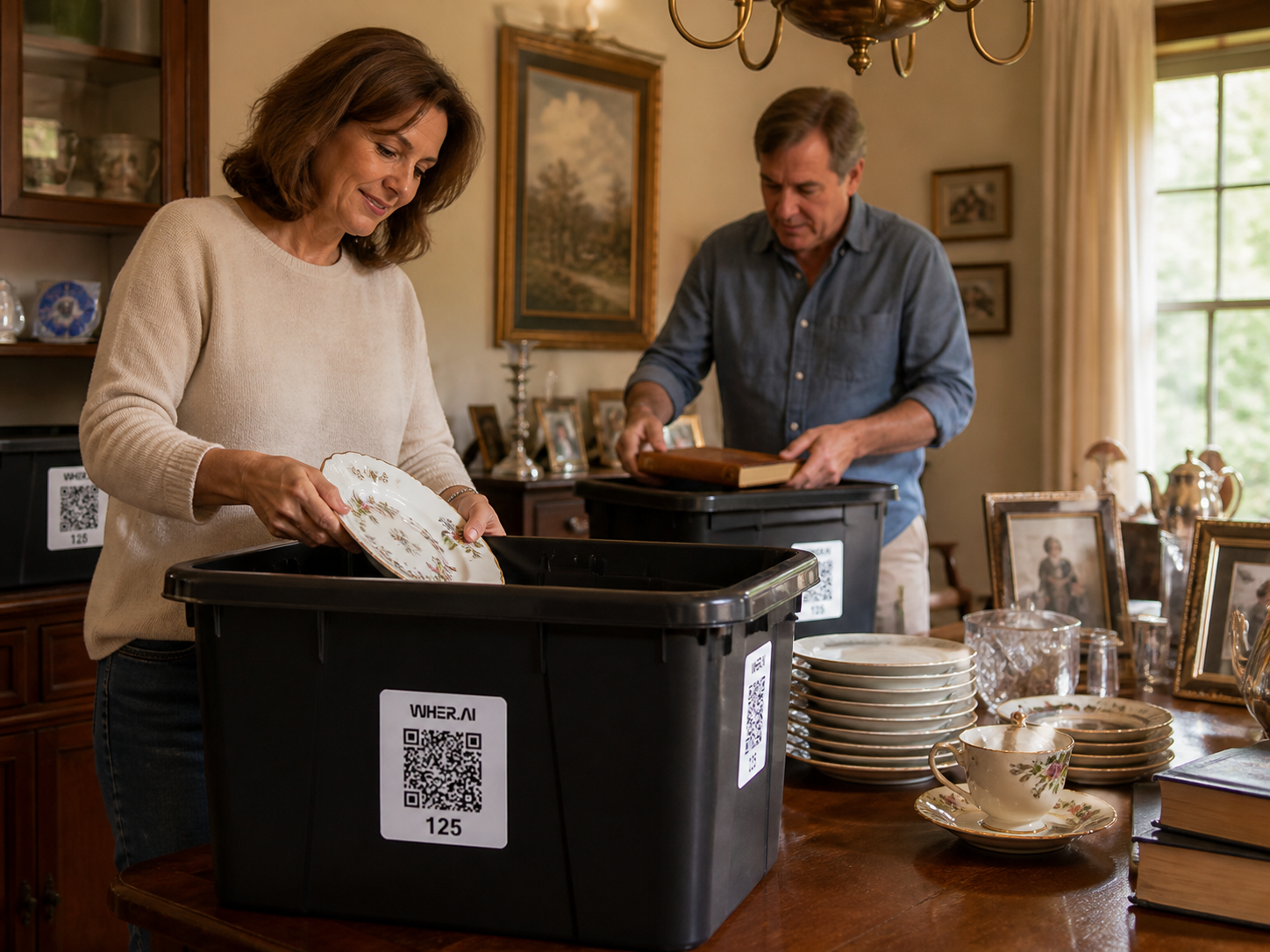
Decades of belongings across rooms, closets, and cabinets exceed anyone’s working memory.
Photos and decisions disappear across text threads and repeated calls.
Keep, sell, donate, and storage boxes move away from the rooms where items started.
Give keep, storage, review, or other user-defined containers stable WHER identities.
Confirm belongings and record the room, box, or storage location where they were placed.
Authorized family members can retrieve the same last-recorded location during discussions.
Start small and preserve progress across visits.
Keep reviewed belongings attached to labeled physical boxes.
Share the same record with authorized relatives.
Recognize meaningful items without relying on descriptions alone.
Keep boxes searchable when they move off-site.
WHER does not appraise, establish title, manage probate, or determine distribution.
No. WHER supports organization and retrieval; it does not value property, establish ownership, provide legal advice, or replace executor records.
Yes. A gradual room-by-room process is a practical way to build the record.
Authorized workspace members can search the shared records according to their access.
No. Families should record their decisions in the appropriate legal or planning system.
Update their recorded location so WHER can return the new last-recorded unit, room, or shelf.
Preserve the memory before the boxes move.