Mystery containers
Months later, identical bins and handwritten ‘miscellaneous’ labels stop meaning anything.
Give every bin, shelf, drawer, closet, and cabinet a recorded address. When someone needs an item later, they can ask WHER instead of asking the one person who packed it.
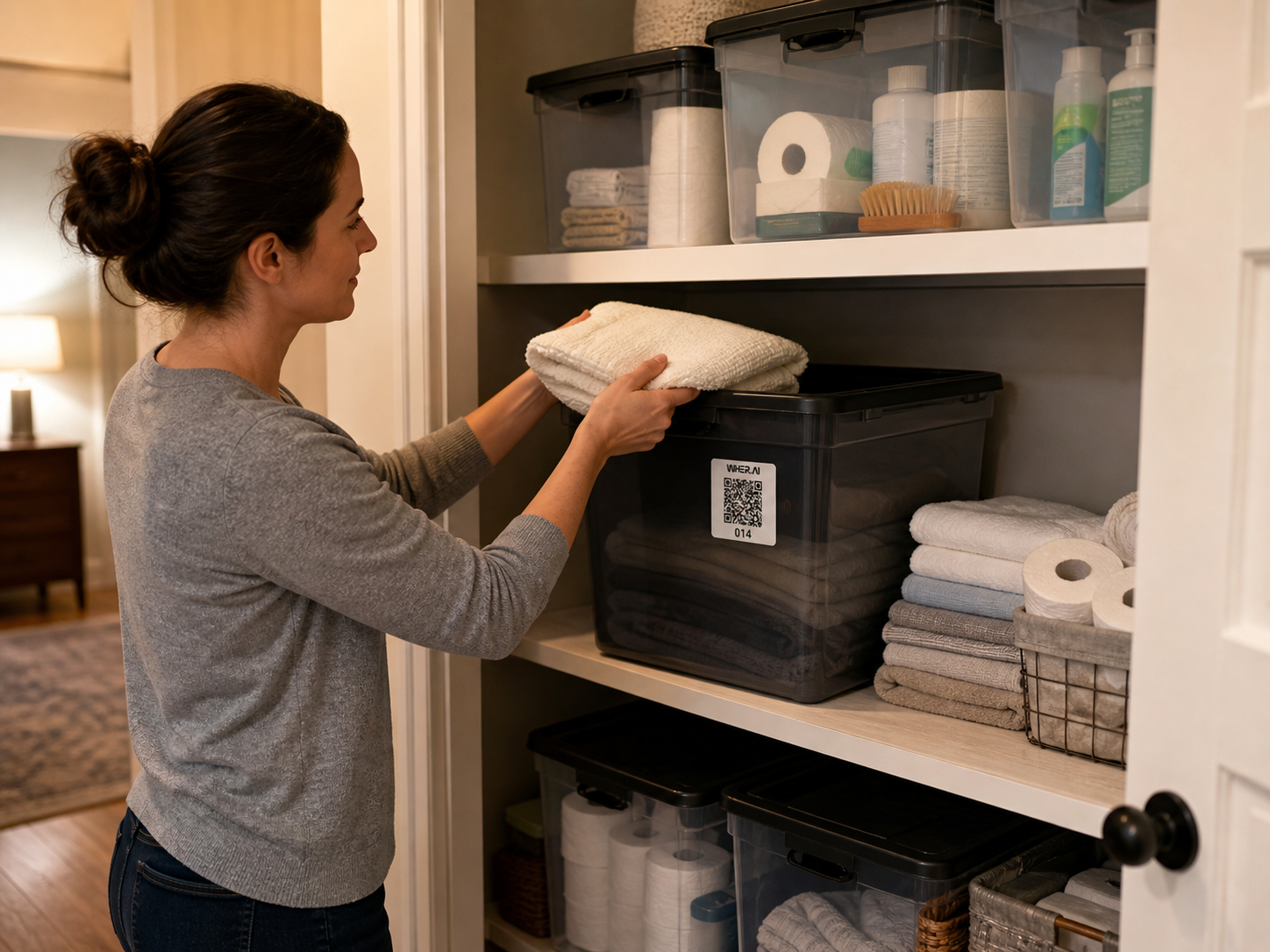
Months later, identical bins and handwritten ‘miscellaneous’ labels stop meaning anything.
You buy another charger, tool, or roll of tape because finding the original takes too long.
Everyone asks the person who put things away, turning shared storage into private knowledge.
Give a bin, shelf, drawer, cabinet, or closet its own WHER identity.
WHER suggests visible items. Review the list, make changes, and save it to that location.
Search naturally to retrieve the last storage location your household recorded.
Associate many belongings with one storage spot.
Record rooms, closets, cabinets, shelves, and bins.
Give household members one consistent place to ask.
Review visual suggestions before saving them.
Search for belongings in the words you actually use.
WHER reports the saved location, not live movement.
WHER connects a storage label with a reviewed record of what belongs in that bin, shelf, drawer, closet, or cabinet.
No. One storage label can represent a location containing many belongings.
Yes. People sharing a WHER workspace can search the same recorded storage memory.
WHER returns the last recorded or assigned storage location, not a continuously tracked position.
Yes. WHER supports printable labels, including a 48-label digital Starter Pack.