One-of-a-kind inventory
Hundreds of visually similar bags, boxes, or garment bins are difficult to remember.
Give one-of-a-kind inventory a reviewed storage memory across bins, racks, closets, and off-site units. WHER works beside your selling platform; it does not replace listings, orders, or live stock control.
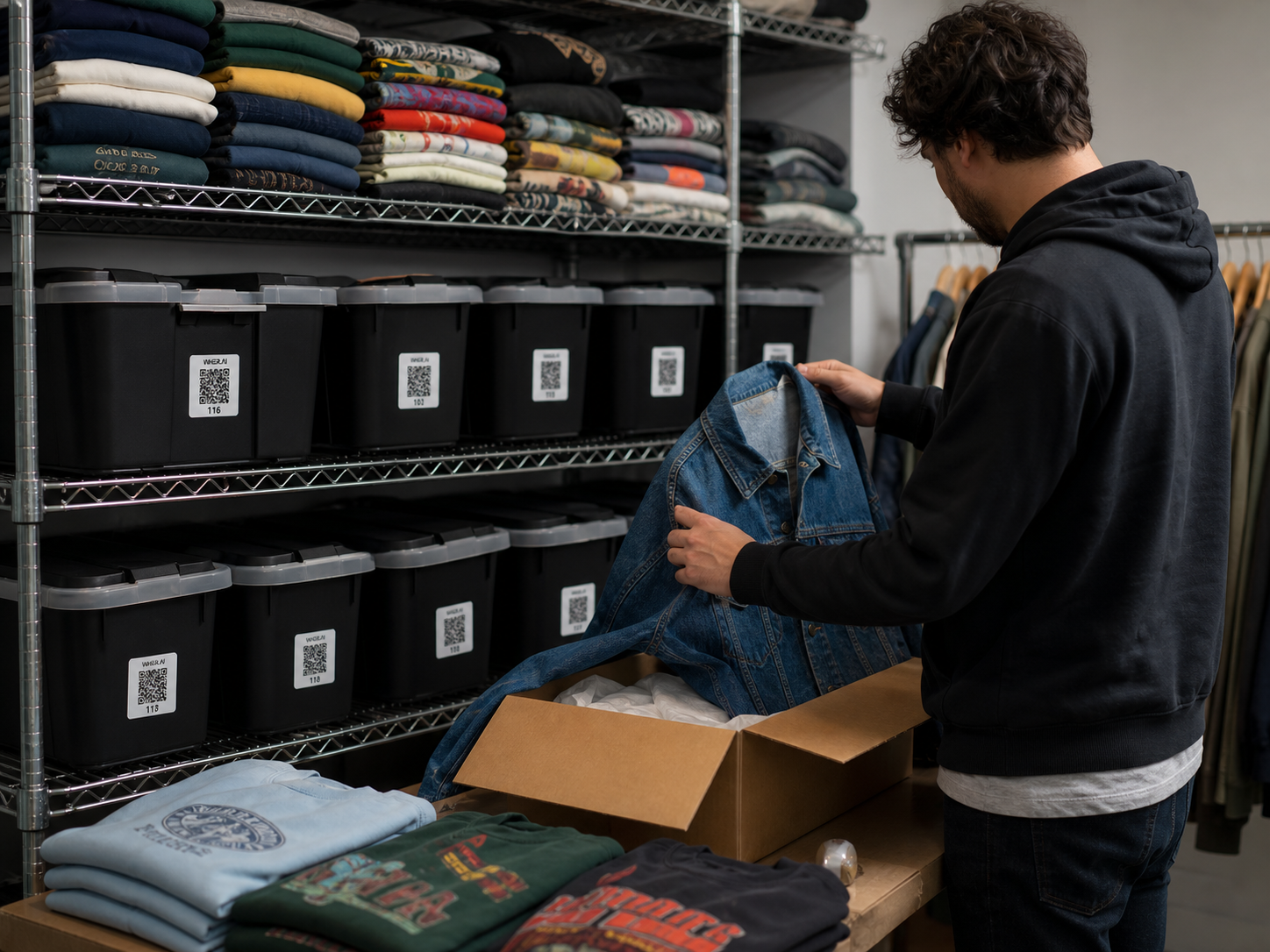
Hundreds of visually similar bags, boxes, or garment bins are difficult to remember.
A listing may survive long after an item moved from a closet to a garage or storage unit.
A partner can pack an order only if the storage knowledge is shared.
Give each resale storage location a WHER identity.
Confirm the visible pieces stored there and use names you will recognize after a sale.
Retrieve the item’s last recorded bin, rack, or unit before pulling it.
Map reviewed items to numbered storage locations.
Separate home, garage, studio, and self-storage records.
Share the same retrieval memory with authorized people.
Use visual context for one-of-a-kind goods.
Keep using the marketplace or storefront you already chose.
Sales and removals must be reflected by user updates.
No marketplace integration is claimed. WHER records the physical location of inventory and works alongside your existing selling tools.
Yes. Reviewed names and photos can be associated with the bin, shelf, or rack where those items were stored.
Authorized workspace members can search the same last recorded locations.
No. WHER is not an order or live inventory platform; someone must update the record when goods move or leave.
Yes. Record distinct rooms, garages, studios, and off-site storage areas.
Turn the next sale into a direct walk to the bin.