Forgotten categories
Drawers, closets, cabinets, and storage bins hold belongings that are easy to omit later.
Create a reviewed, photo-backed record of belongings room by room and storage spot by storage spot. WHER helps you remember; it does not replace receipts, appraisals, policy advice, or your insurer’s required forms.
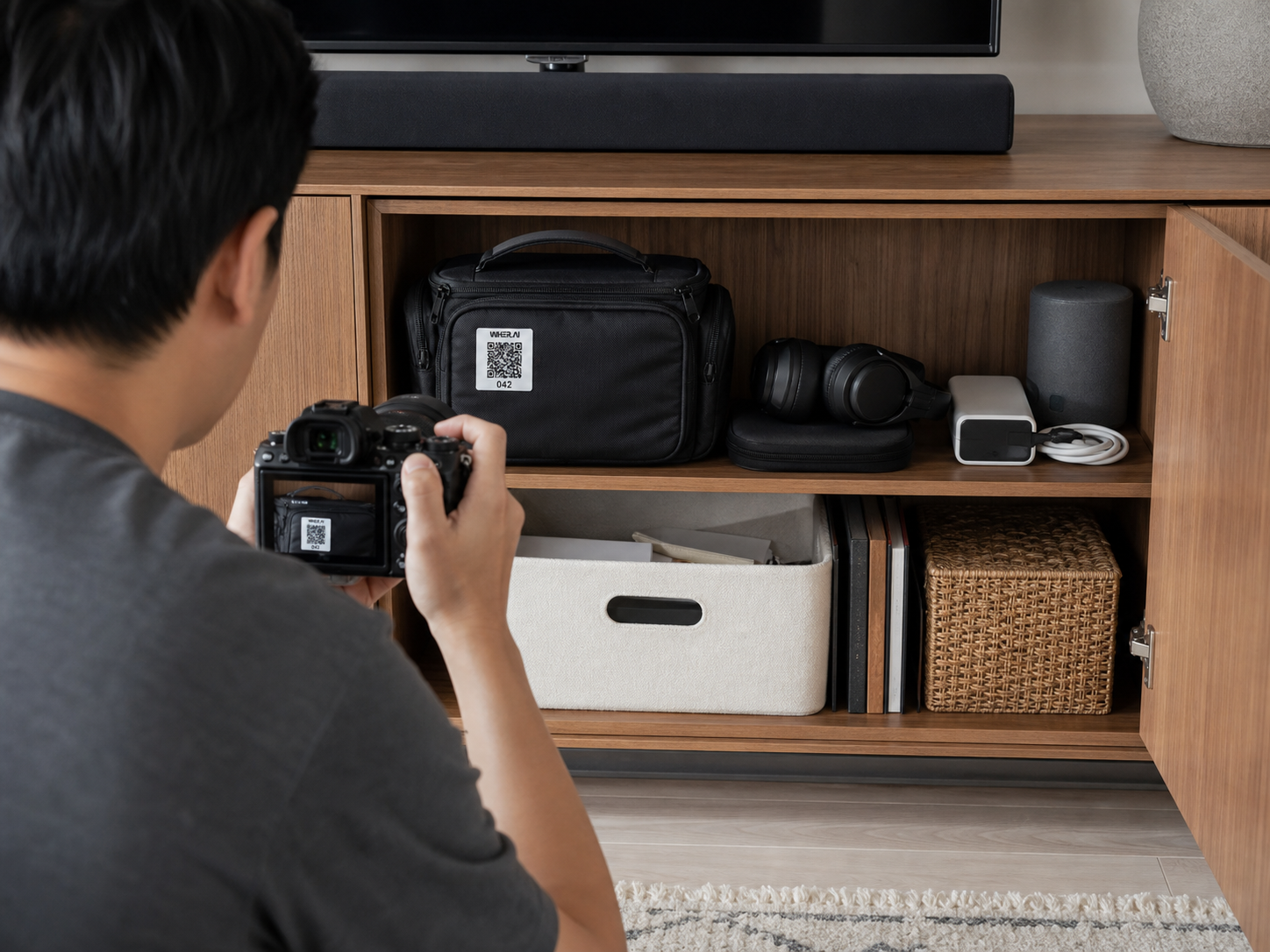
Drawers, closets, cabinets, and storage bins hold belongings that are easy to omit later.
Camera-roll images lack a consistent room, container, and location structure.
A useful personal record is not automatically an insurer-ready claim or proof of value.
Give the cabinet, closet, drawer, or bin a durable WHER identity.
Confirm visible items and keep the description connected to its recorded location.
Retrieve the reviewed record later and supplement it with receipts or documents your insurer requests.
Keep records grouped by familiar physical locations.
Attach visual memory to reviewed item records.
Remember where receipts and warranty folders were placed.
Let authorized members search the same records.
Use the same memory to find things before any emergency.
WHER does not appraise items or guarantee coverage or claim outcomes.
No. WHER is a searchable belongings memory. It does not file claims, interpret policies, appraise property, or guarantee acceptance by an insurer.
Start with rooms, closets, cabinets, bins, and higher-value belongings, then keep receipts or serial documentation separately when appropriate.
Not by itself. Ask your insurer what evidence it requires and retain receipts, appraisals, and policy documents.
Yes. Renters can keep the same kind of reviewed household record, while checking their own policy requirements.
Yes. Authorized workspace members can contribute to and search the shared record.
Build a memory you can search later.