Volunteer turnover
The person who knew the closet system may not be there for the next event.
Record donations, decorations, event supplies, and equipment across closets, annexes, sheds, and off-site storage. WHER gives authorized people one shared answer when the team changes.
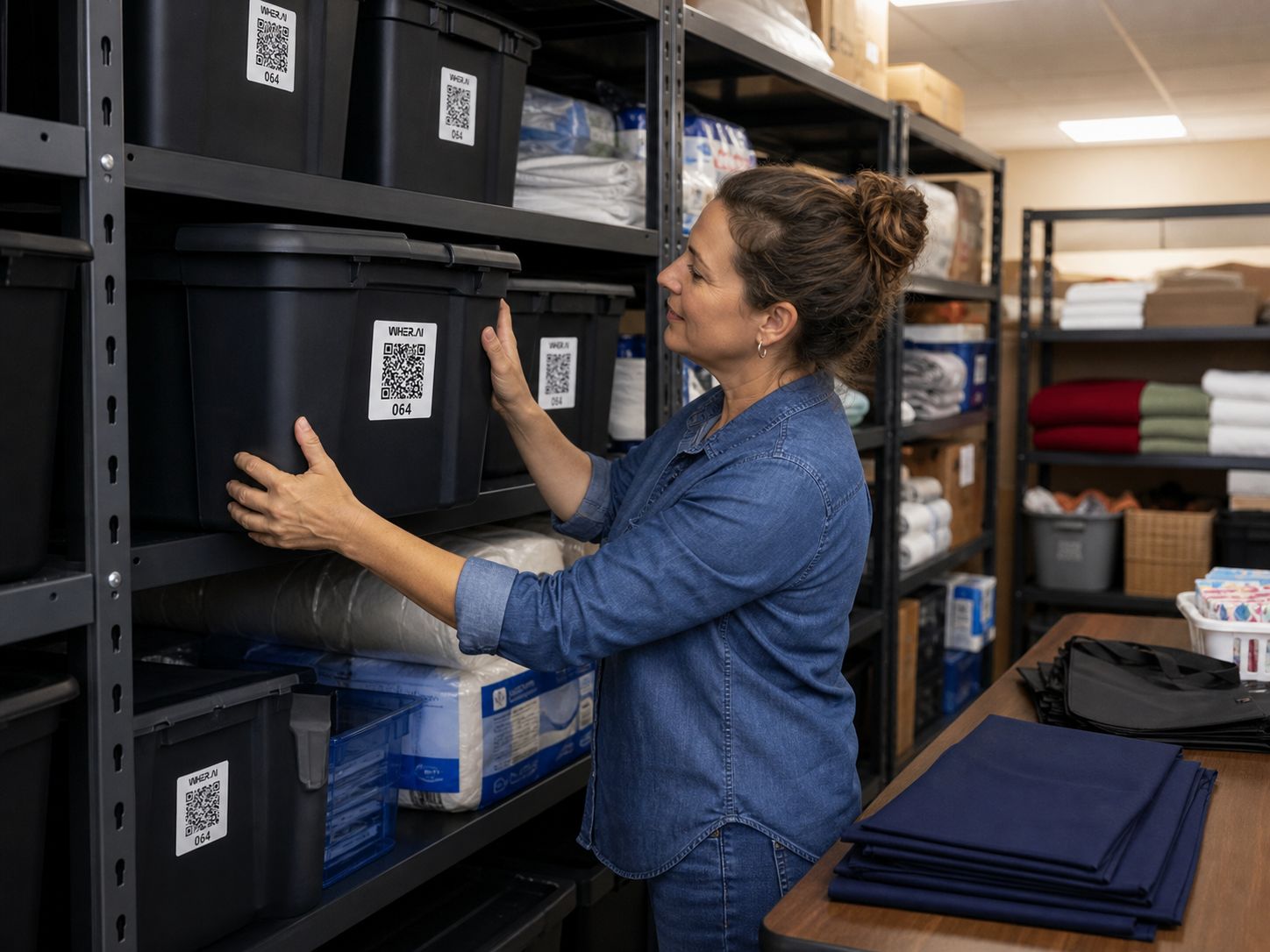
The person who knew the closet system may not be there for the next event.
Useful goods enter boxes and shelves without a durable shared record.
Main rooms, annexes, sheds, and units develop separate maps and nicknames.
Give important storage spots an easy-to-scan WHER identity.
Confirm donated goods, equipment, and event supplies before saving.
Authorized staff and volunteers retrieve the same last-recorded location.
Keep storage knowledge in the workspace, not one person.
Represent buildings, rooms, closets, shelves, and bins.
Keep reviewed stored goods easier to rediscover.
Search decorations, signs, linens, and gear before setup.
Use workspace permissions for authorized contributors.
WHER does not promise grant, accounting, or insurance compliance.
Authorized volunteers can use the shared workspace according to the roles and access your organization provides.
Yes. WHER can distinguish multiple recorded spaces and the storage locations inside them.
No such nonprofit CRM capability is claimed. WHER focuses on belongings and their recorded storage locations.
Yes. Printable WHER storage labels can help identify closets, shelves, and bins.
No. Use the systems and documentation required by your board, accountant, funder, or insurer.
Keep the answer with the organization.